Day 4 · Agrigento Coast
Valley of the Temples
Step 1 · Before you enter · ~15 sec

Valley of the Temples

★ 4.7 (60,145) €28 Maps ↗ Website ↗

Agrigento’s famous “valley” is actually a ridge, and the name is a 19th-century mistake that stuck. That odd lie of geography is the first clue that this place has been translated, renamed, and repurposed for over 2,000 years.

Stand outside · play the audio first, then read on.

Step 2 · The story · ~2 min

Why this place matters

Agrigento began as Akragas, founded in 580 B.C. on a ridge above the sea, and by the 5th century B.C. it had become wealthy enough to build temples on a scale that still feels slightly excessive, which is part of the appeal. That rise had a human face: the tyrant Theron, whose victory over the Carthaginians at Himera in 480 B.C. helped turn the city into one of the leading Greek colonies in Sicily.[3][5]

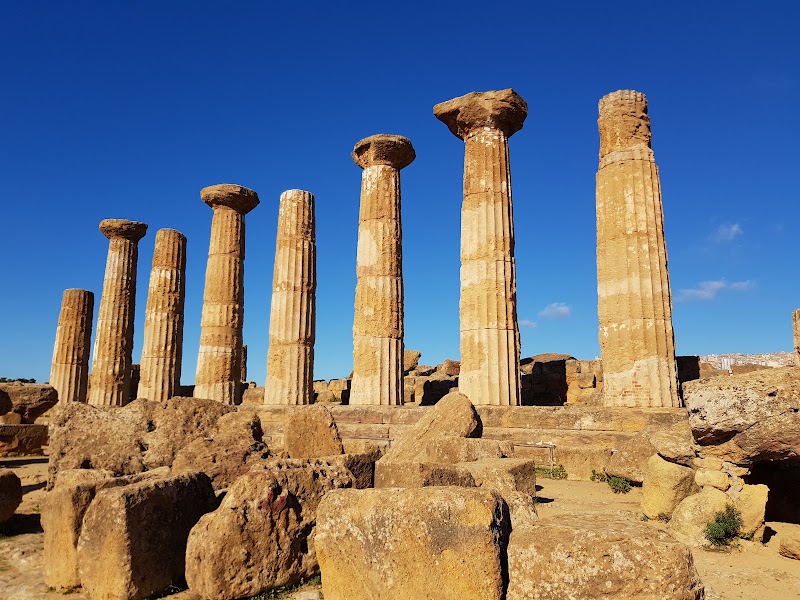
Then came the turning point. In 406 B.C., Carthaginian forces destroyed Akragas, and the city never recovered its old power; later, in 210 B.C., Rome took it and renamed it Agrigentum.[3][5] The temples outlasted the city’s fortunes, which is why the place matters: it preserves the scale of a Greek city that was briefly rich, then abruptly broken. You can still read that story in the Temple of Concordia and the long row of Doric columns standing above the olive trees.[2][6]

Read more →
Step 3 · Going in

Here's how

Best time to visit

Go at opening on Sunday, before the heat and the tour groups build. Late August brings harsh sun and very little shade, so hats, water, and sunscreen are not optional.

Entry strategy

Use Porta V or the Temple of Juno entrance so you start high on the ridge. That saves effort and avoids doubling back in the heat.

Recommended route

Walk downhill west in this order: Juno, Concordia, Heracles, Zeus. At family pace, allow about 2.5 hours so you can stop for the details instead of rushing past them.

Tap ⓘ at the top right anytime for hours, address, prices.

Look at this · 1 of 4
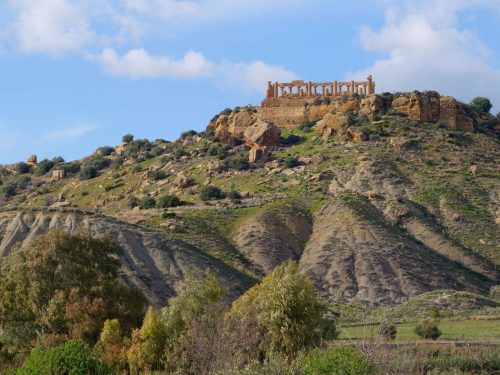
Juno's ridge terrace

Juno's ridge terrace

Where to find itStand just inside Porta V and turn toward the Temple of Juno’s platform, right on the upper ridge above the road and sea.

Look forLook for the broad terrace, the surviving column line, and the open drop beyond it toward the coast.

Why it matters · This is where the site announces itself as a landscape, not just a row of ruins. If you start here, you see why the ridge mattered: the temple reads against sea light and space, which is the whole trick of the place.
Look at this · 2 of 4
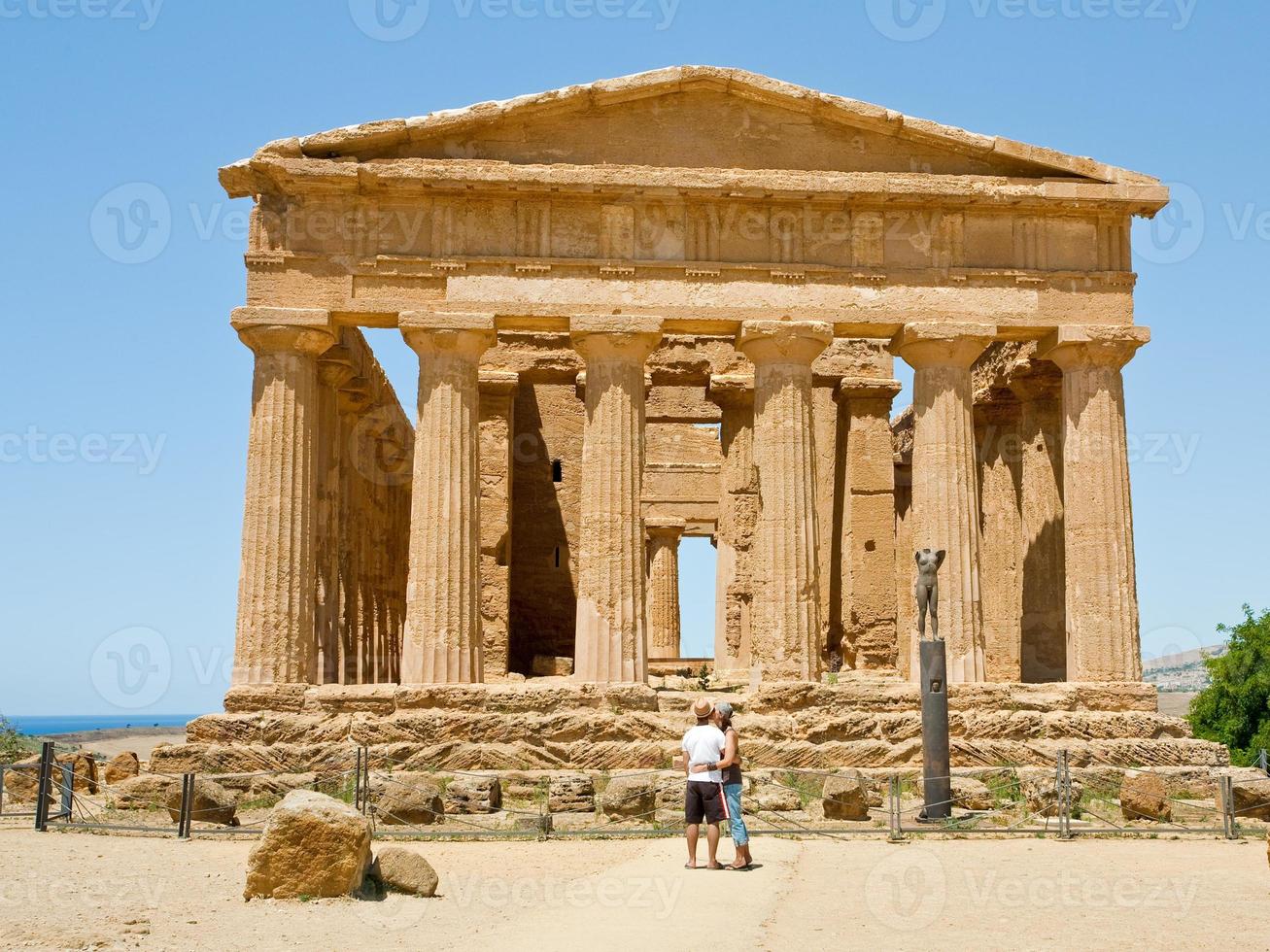
Concordia’s intact frame

Concordia’s intact frame

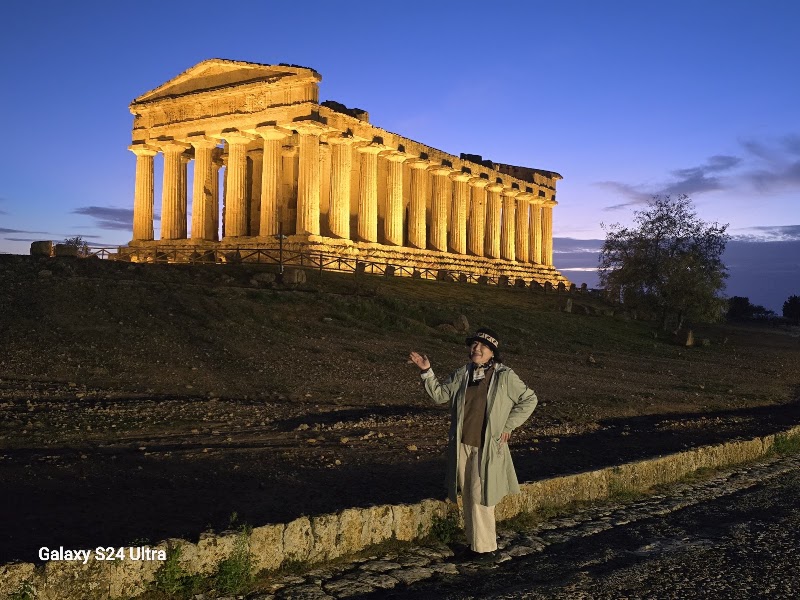
Where to find itMove to the Temple of Concordia and stand back far enough to take in the whole building from the front or side.

Look forLook for the nearly complete outer colonnade and the crisp rectangle of the cella inside it.

Why it matters · This is the temple people remember because the proportions still work from a distance, not just in fragments. It matters because it shows how a Greek temple was meant to be read as a whole shape, not as scattered stones.
Look at this · 3 of 4
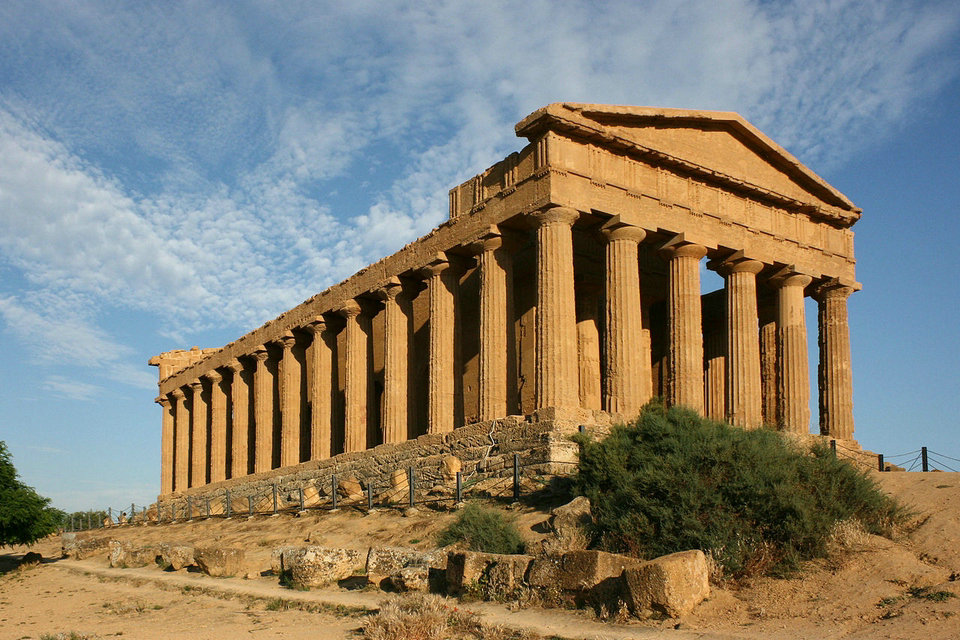
Concordia's rock-cut base

Concordia's rock-cut base

Where to find itWalk around the Temple of Concordia’s perimeter and look down along the ground beside the temple platform.

Look forLook for the cut bedrock, foundation traces, and low rock-carved edges around the temple area.

Why it matters · Most visitors miss these because they are underfoot and easy to ignore. They matter because they reveal the platform work that anchored the temple to the ridge, which is part of the building’s story, not just its decoration.
Look at this · 4 of 4

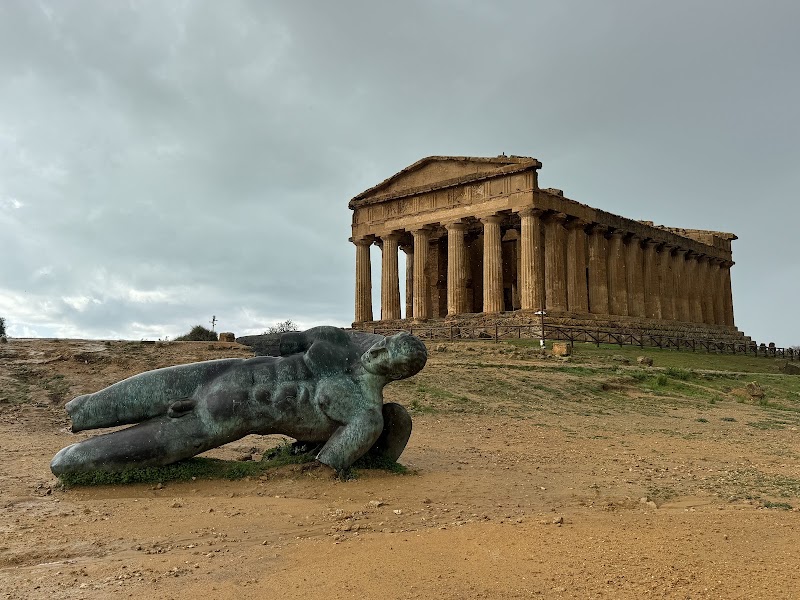
Zeus block field

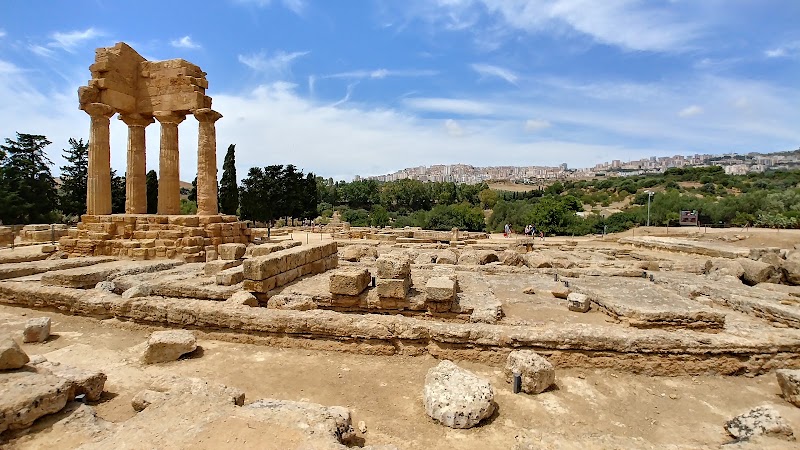
Where to find itAt the Temple of Zeus area, stop where the fallen masonry spreads out across the ground and look across the full footprint of the ruin.

Look forLook for the giant collapsed blocks and the scale of the fallen pieces compared with people walking beside them.

Why it matters · This is not a delicate ruin; it is a wreck on a massive scale. Seeing the blocks in place, spread across the floor, makes the size of Zeus’s temple legible in a way a signboard never does.
Photo gallery

What it looks like

Almost done · before you leave

Spot these

Find each one — tap to tick it off.

Done · time to eat

Nearby eat & drink

Filters

Section
Price
Max walking time
Minimum rating
Type

Lunch

Sit-down lunch spots

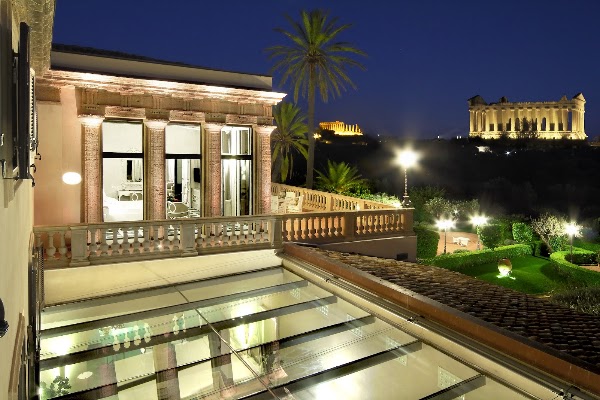
  • Hotel Villa Athena

    14 min walk
    ★ 4.6 (1.005) Resort hotel

    Posh hotel featuring a bar, a gym & a garden, as well as an outdoor pool, a restaurant & a spa.

    • cassata
    • swordfish
    • arancine
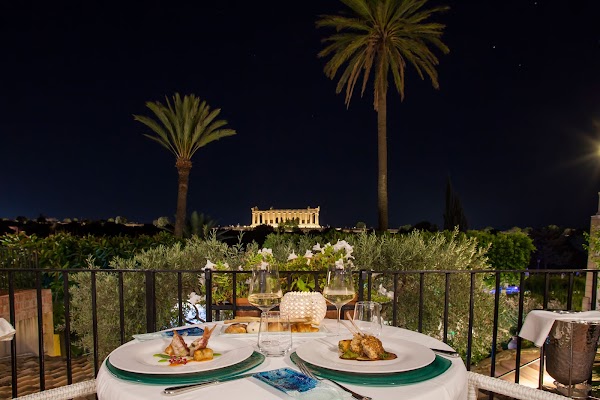
  • La Terrazza degli Dei

    14 min walk
    ★ 4.4 (213) Restaurant
    • Bluefin Tuna Carpaccio
    • Red Prawn Pizzaiola
    • Cassata siciliana

Dinner

Where to land in the evening

  • Hotel Villa Athena

    14 min walk
    ★ 4.6 (1.005) Resort hotel

    Posh hotel featuring a bar, a gym & a garden, as well as an outdoor pool, a restaurant & a spa.

  • La Terrazza degli Dei

    14 min walk
    ★ 4.4 (213) Restaurant
    • Bluefin Tuna Carpaccio
    • Red Prawn Pizzaiola
    • Cassata siciliana

Quick grab

Fast food & takeaway for when you just need something fast

  • Lo so by Siculò

    53 min walk
    ★ 4.2 (1.100) €€ Sandwich Shop
    • Arancina Veggie
    • Gamberi
    • Branzino
  • Bonamorone Ristorante

    29 min walk
    ★ 4.6 (923) €€ Restaurant
    • Alici al Sole
    • Sfizziata con acciughe di Sciacca e caciocavallo siciliano DOP
    • Pinsa alla carbonara
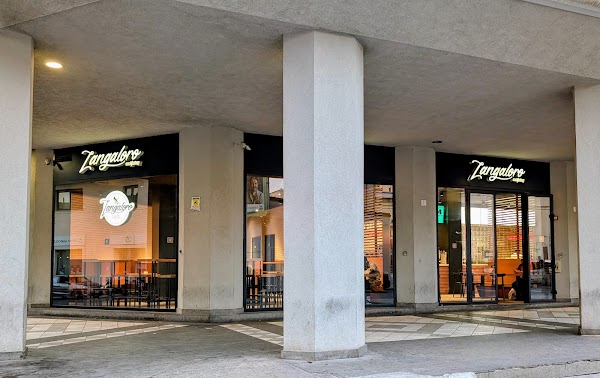
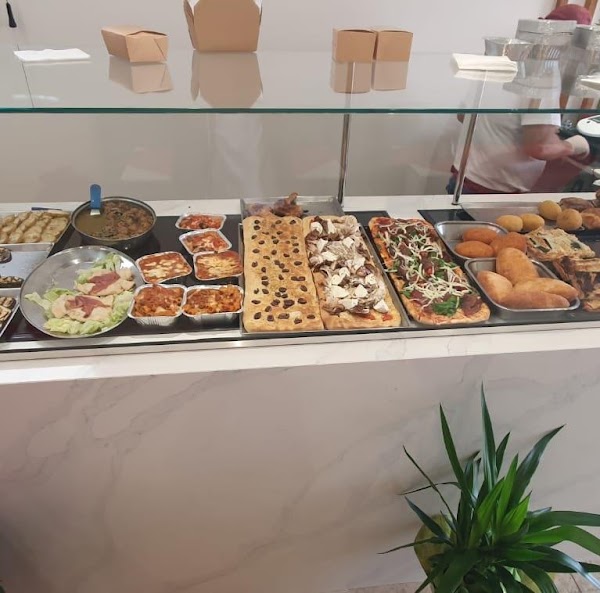
  • Zangaloro Meat Factory

    54 min walk
    ★ 4.1 (399) €€ Fast Food Restaurant
    • 2000 Burger
    • Angus Burger
    • Angus Cheese Burger
  • Pizzeria Pizza Stadio Mosè

    44 min walk
    ★ 4.3 (309) Pizza Restaurant
    • Pizza Tutti Salumi
    • Pugliese
    • Gorgonzola
  • Pizzeria Dante

    48 min walk
    ★ 4.1 (209) Pizza Restaurant

Searched, none found within range: Specialty coffee · Coffee & bakery · Familiar chains / fast food. The nearest fast food is likely in the closest town.

Practical info

GPS 37.2906, 13.5858
Typical duration (min) 90

More about this place

Valle dei Templi is not really a valley but a long ridge at the southern edge of ancient Akragas, founded around 580 BC by settlers from Gela, and its temples were built mainly in the 6th and 5th centuries BC, when the city was at its wealthiest.[4][7][10] What survives is a lesson in Sicilian Doric architecture rather than a tidy “ruin field”: UNESCO singles out the site for temples that are among the world’s most extraordinary representations of Doric design, and the whole park preserves one of the largest archaeological landscapes in Europe.[1][3] The best-known survivor, the Temple of Concordia, belongs to the high classical phase around 440–430 BC, while the Temple of Heracles is earlier, around 510 BC, so the ridge lets you read the evolution of Greek temple building in one walk: heavier archaic massing giving way to the cleaner proportions of the classical age.[5][11]

The political history matters as much as the stone. Akragas was a Greek colony that became exceptionally prosperous before the Carthaginian sack of 406 BC and the later Roman takeover in 210 BC; the temples are therefore monuments of civic self-confidence as well as religion.[2][4] They were dedicated to gods such as Hera, Heracles, Zeus, and Concordia, but they also broadcast the city’s status to rivals across the Mediterranean.[6][15] Unlike the better-known temple landscapes of mainland Greece, this one is set on a defensible escarpment above the sea, which gives the ruins their particular force: a religious quarter doubled as a city’s public face.

Sources: